As M&I continues to evolve its events, technology and approach to matchmaking, Duncan sits at the intersection of commercial strategy, innovation and the relationships that underpin the business.
Since joining M&I, his role has grown alongside the company, spanning everything from long-term commercial strategy and team development to AI, product innovation and partner relationships. We caught up with him to talk about why technology should make events more human, not less; the thinking behind M&I’s promise that delegates will “never have the same meeting twice”; what really happens behind the scenes at a forum; and where he believes the MICE industry is heading next.
Since joining M&I, both the business and your own role have evolved significantly. How has that journey unfolded, and what does a typical day look like for you now?
Joining M&I was less a leap of faith and more a due-diligence exercise, just run in reverse. I told Richard, our CEO, in the interview (half-joking) that I was effectively interviewing businesses for the role, not the other way round. I’d built my own scorecard for what came next: real culture, genuine professional growth, an environment that treats innovation as a habit rather than a buzzword, a product worth believing in, and people who actually bring passion to the table. Not a long list. Just non-negotiable.
Two years in, I got all five – and the role has grown to match the ambition around it.
No two days look the same, which is exactly how I like it. Some mornings I’m deep in long-term commercial strategy, building the structure for where we want to be in three years, not just this quarter’s numbers. By lunchtime, I might be coaching a rep through a tricky negotiation or pulling apart a bespoke proposal line by line. Then I’m on a call supporting a Convention Bureau pitch, and by the afternoon I’m sat with the tech team figuring out how AI can take the busywork off our plate, so the team spends more time doing what humans are actually still better at: building relationships and closing deals.
Strategy, coaching, product, tech, forecasting – it’s less a job description these days and more a Venn diagram, with me somewhere in the middle.
AI is transforming every industry, but M&I has always been about human connection. How are you using AI and intelligent technology to make events smarter while ensuring relationships remain at the heart of the experience?AI is transforming every industry, but M&I has always been about human connection. How are you using AI and intelligent technology to make events smarter while ensuring relationships remain at the heart of the experience?
We’re doing exactly that – and doing it deliberately.
I’d put us in the top 1% of businesses in hospitality when it comes to embracing AI. And yet we’re also one of the most unapologetically human businesses I’ve ever worked in – more personality than an Italian wedding, and a lot fewer arguments about the seating plan. Those two things aren’t in tension – they’re the whole strategy.
The blend is simple in principle, harder in practice: use automation, AI and ML to do the heavy lifting so the humans can do the human part. Our tech means you could attend every forum we run and never meet the same person twice; the matching is that precise. AI has streamlined our rebooking process to the point where our sales team spend less time on admin and more time actually talking strategy with their hotel partners. Our Wyred app hands suppliers tailored meeting notes before they’ve even sat down, so prep time turns into thinking time.
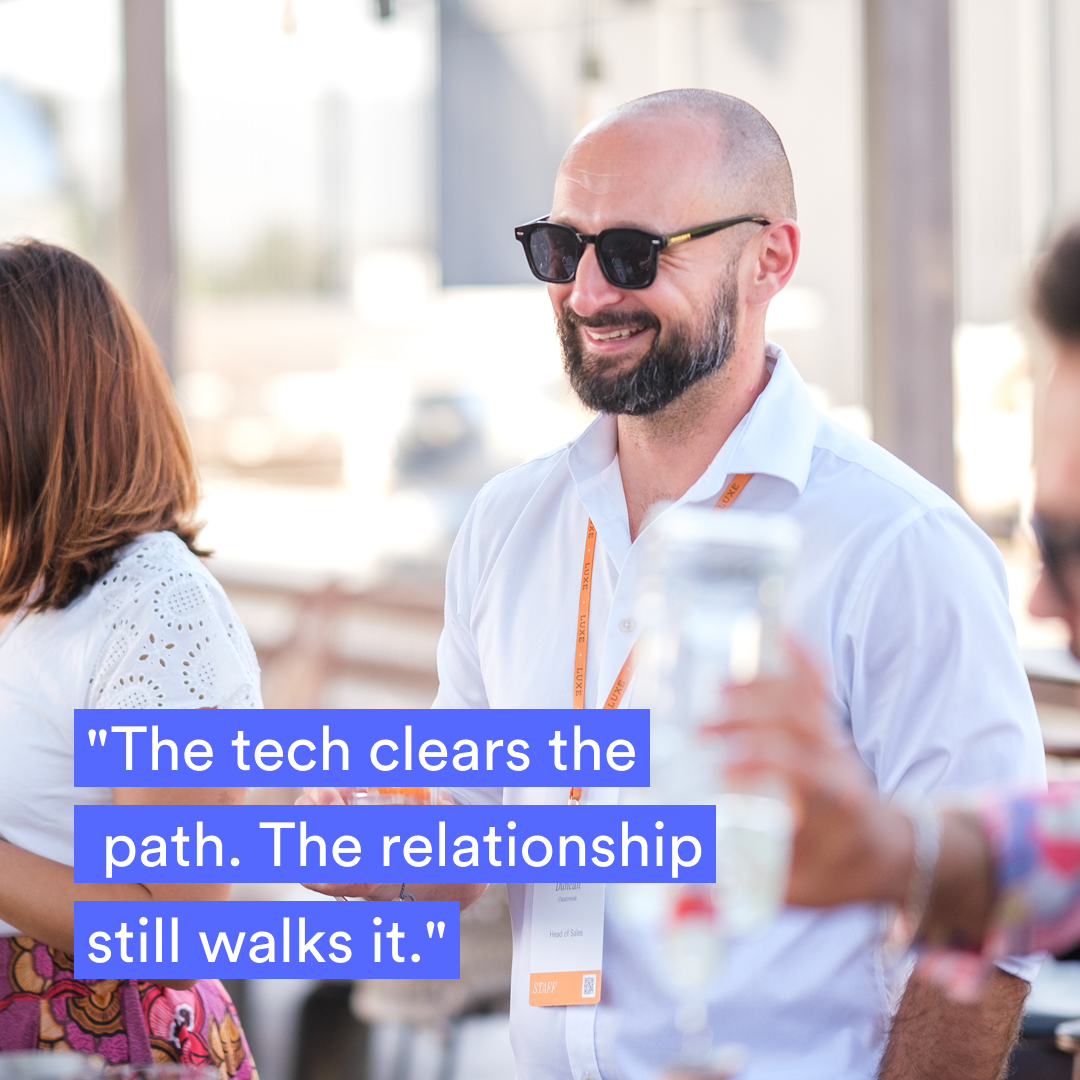
I could go on. But here’s the bit I love most: ask a rep to make an introduction to the right person on the show floor, and they still can – instantly and correctly – because they know the community, not just the CRM. The tech clears the path. The relationship still walks it.
M&I has introduced its promise that delegates will “never have the same meeting twice.” How does the matchmaking technology actually achieve that, and why is it such an important step forward for buyers and suppliers?M&I has introduced its promise that delegates will “never have the same meeting twice.” How does the matchmaking technology actually achieve that, and why is it such an important step forward for buyers and suppliers?
You only meet once. Think of us as a MICE 007 – minus the martinis (or not), plus the RFPs.
Jokes aside, the tech is the best in the business, but the real story is the data behind it. Like any AI, it’s only as sharp as the information it’s fed. The more we know about a supplier, the better the matching gets, and the more precisely we know who they have and haven’t sat across the table from.
Here’s the bit suppliers often get backwards. The instinct is to spread yourself thin across multiple forums, assuming that’s how you reach more new buyers. It’s actually the opposite. Stay with M&I, and the system gets to know you properly, which means it can keep introducing you to people you’ve genuinely never met. With the volume of new buyers we’re recruiting every year, you could sit through 240+ meetings across six forums with us this year and still not repeat a single face. And we can keep that streak going for years, not months. That’s a promise.
What that really means is your entire supplier or buyer ecosystem can live in one trusted place, instead of being scattered across a dozen platforms and spreadsheets. That saves an enormous amount of time, cuts the stress, and removes the unknowns you can’t plan for which, in this industry, is worth a lot!
One of your recent LinkedIn posts said that people don’t just buy products anymore – they buy solutions, convenience and experiences. How does that philosophy influence the way M&I designs its events?One of your recent LinkedIn posts said that people don’t just buy products anymore – they buy solutions, convenience and experiences. How does that philosophy influence the way M&I designs its events?
Look at any brand that’s actually cracked it – Apple, Tesla, Amazon. They are not really selling phones, cars or a box on your doorstep. They’re selling certainty, ease and a feeling. Take any one of those three away and the magic goes with it.
For M&I, that translates into three very deliberate layers. The solution is a guaranteed path to highly qualified meetings with real intent – meetings that turn into RFPs, not just diary entries. The convenience is that it’s all done for you: matched, scheduled, meeting notes waiting before you’ve even sat down, so the only thing left to bring is yourself. And the experience – well, if you’ve been to an M&I forum, you already know. If you haven’t, you’re in for a treat.
Every department, from tech to production to sales, is constantly asking a version of the same question: how do we make the solution sharper, the convenience more invisible, and the experience harder to forget? That’s not a slogan for us – I believe it is the actual job.
What has helped M&I build lasting relationships with its partners over the years?
I was talking to one of our ambassador suppliers at M&I Stockholm a few months back, a man who will happily tell you exactly what he thinks, good or bad, without dressing it up. He said something in front of a group of new suppliers that I haven’t stopped thinking about since: “I’m extremely vocal about what I like and don’t like, in life and in business. Whenever I give M&I feedback, the next time I look, it’s not just been addressed, it’s been improved beyond what I actually asked for.”
That’s the whole relationship in one sentence. We don’t treat feedback as a complaints inbox to clear – we treat it as a gift, because it means someone cares enough about what we’re building to help us build it better.
Great events always look seamless from the outside, but there’s a huge amount happening behind the scenes. What’s something attendees would be surprised to learn about what goes into delivering an M&I event?Great events always look seamless from the outside, but there’s a huge amount happening behind the scenes. What’s something attendees would be surprised to learn about what goes into delivering an M&I event?
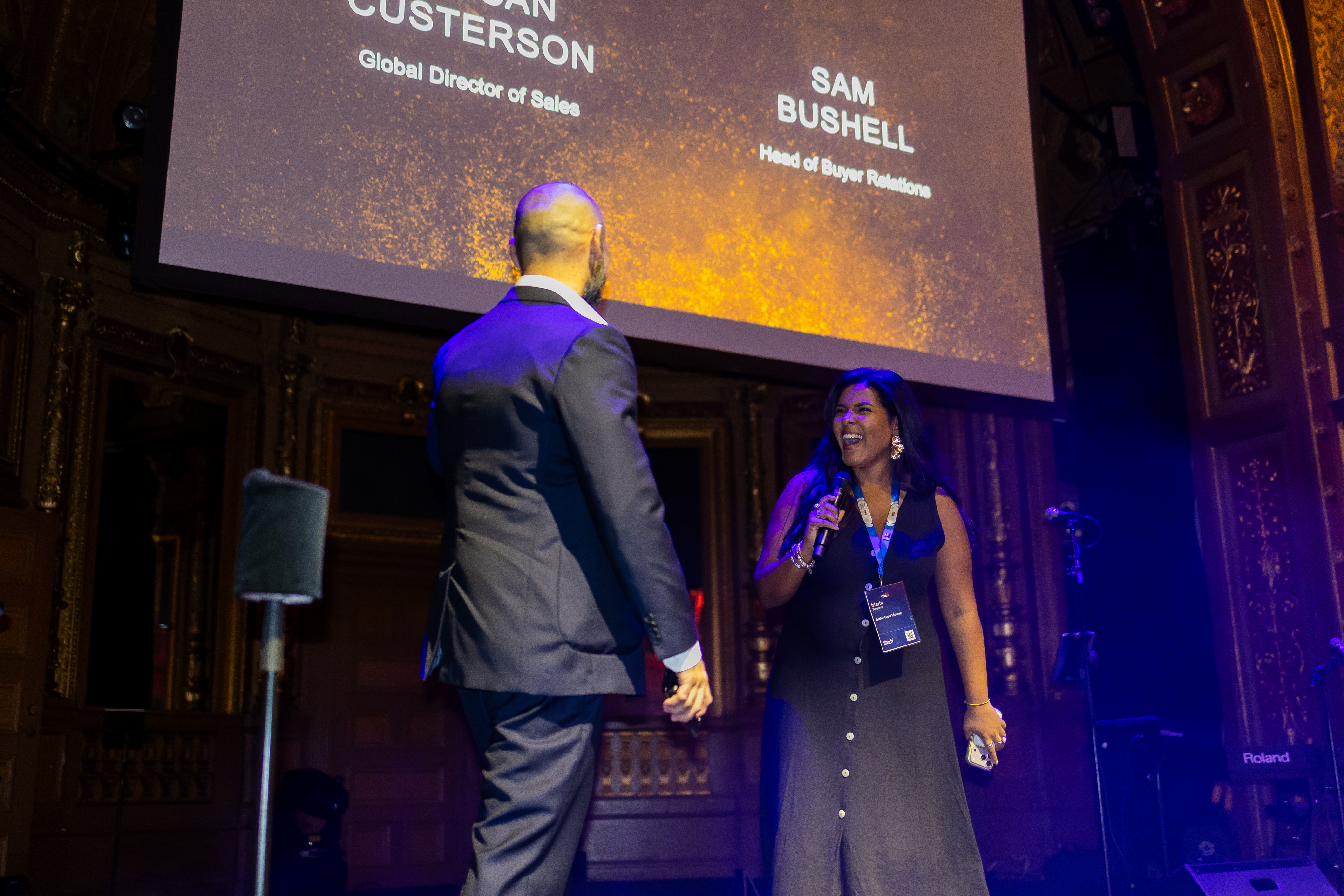
Honestly? It might not be the surprise people expect, but we laugh. A lot. Probably more than a room full of adults juggling six-figure budgets and three-day build schedules and logistics technically should.
What people don’t see is that the thing actually holding an event together isn’t the run sheet – it’s the team behind it. Cross-departmentally, genuinely enjoying each other’s company and dragging one another through the 4am moments when something’s gone sideways with a laugh rather than a meltdown.
And onsite, seniority goes straight out the window. Job titles stay in the office. Everyone’s moving boxes, fixing signage, chasing down a missing badge, myself included, and I’m regularly told off by someone with half my tenure – and I love it! If you want to know how healthy a culture really is, don’t ask in the boardroom. Watch how people interact onsite at 6am, when nobody’s really watching.
M&I is known for carefully curating its buyer and supplier community. Why is taking the time to qualify and vet attendees so important, and how does it benefit everyone involved? M&I is known for carefully curating its buyer and supplier community. Why is taking the time to qualify and vet attendees so important, and how does it benefit everyone involved?
For my side of the business (supplier sales), this isn’t a footnote to our USP; it is the USP. Anyone can fill a room. Filling a room with people who have real budget, real intent and the actual authority to sign is a completely different skill, and it’s the one that matters.
The process isn’t a tick-box exercise at sign-up; it’s rigorous and ongoing: background checks, two-part budget verification, and confirmation that the person sitting across the table genuinely represents who they say they do, run on a continuous cycle, not a one-off. Our BR team, headed up by Sam Bushell, are exceptional at this. They don’t just process applications; they know their buyers – who they are, what they actually need, and whether they’ll get real value from being in the room.
That rigour is exactly why the best buyers keep choosing us. They know their precious time won’t be wasted.
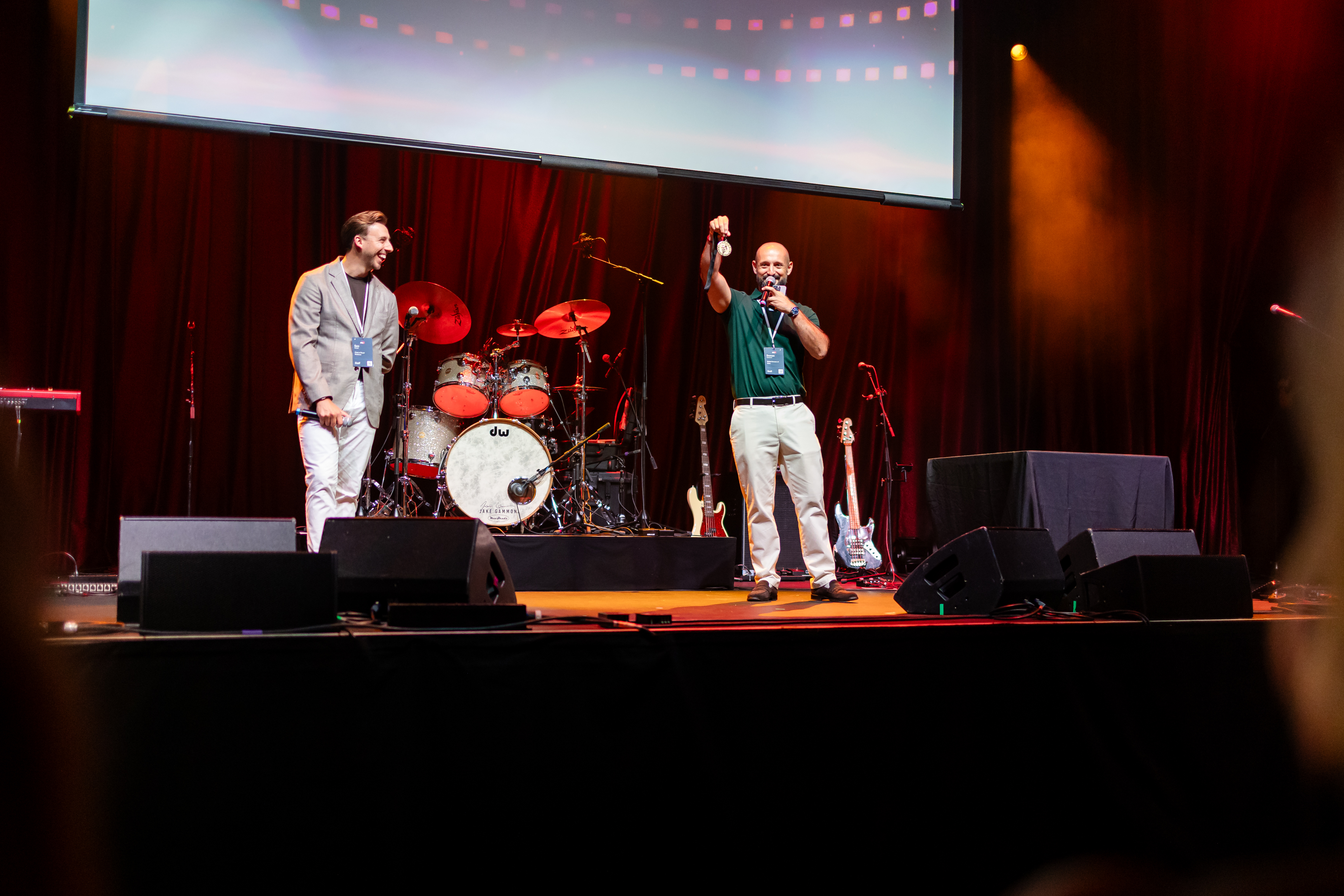
If someone is considering attending their first M&I event, what can they expect? What makes the experience different from a traditional trade show, and how would you recommend they make the most of it?
I spent years working on large-scale exhibitions before M&I, so I know exactly how hard those events are to sell: endless floor space, footfall you can’t control, and highly uncertain ROI.
Compared to that, the word that keeps coming to mind for M&I is seamless. Onboarding is seamless. Arrival is seamless. The meetings themselves are seamless – curated, scheduled and backed by data rather than hope. Even the organic moments, the corridor conversations and dinner-table introductions, feel like they’re happening naturally rather than left entirely to chance. And unlike a trade show, where success gets measured in footfall and business cards collected, you walk away from an M&I event with something you can actually put a number on.
If I had one piece of advice for a first-timer: don’t over-plan, and don’t hold back. Trust the matching to do its job, but show up for the informal moments too – the dinners, the downtime, the conversation that starts because someone sat next to you rather than because a meeting was scheduled. That’s usually where the best relationships actually start.
Looking ahead, what excites you most about the future of M&I, and where do you see the MICE industry heading over the next few years?Looking ahead, what excites you most about the future of M&I, and where do you see the MICE industry heading over the next few years?
What excites me most is that we’re not chasing this industry, we’re setting the pace of it – and that’s a genuinely fun position to build from.
I think the next few years for MICE will look a lot like the last few years for retail: a slow, then sudden, rejection of “more” in favour of “right.” The old trade-show model – acres of floor space, footfall treated as a vanity metric, hoping the right person happens to walk past your stand – is going to keep losing ground to curated, qualified, high-intent gatherings. Buyers and suppliers are both getting far less patient with wasted time, and honestly, so am I.
For M&I specifically, I’m most excited about how much smarter the matching gets from here – not just more data, but better data, feeding meetings that feel less like a lucky draw and more like we read your mind before you walked in the room.
If I had to bet on where this industry lands: fewer events, better ones, and technology doing the boring work so humans can get on with the interesting part. The businesses that get that balance right will define the next decade of MICE. I intend for us to be one of them, ideally the one everyone else is quietly trying to copy (still).
What’s the one destination you’ll never get tired of visiting? What’s the one destination you’ll never get tired of visiting?
This is the hardest question so far, because what I actually love is variety – finding somewhere new and throwing myself into it, rather than returning to the same place every year. I always tell myself, “I’ll come back here next year,” and then somewhere new gets in the way.
To pick some M&I favourites: Marrakech; Lisbon, which holds a soft spot as my first-ever M&I; and West Hollywood, home of LUXE 2027, which has an energy you genuinely have to experience to understand – words undersell it.
What are your three travel essentials?
Ask me this a few years ago and I’d have said a good book and noise-cancelling headphones. Now it’s:
The tiredness kit – hydration sachets, eye drops and vitamins.
My gym kit. An extra 30 minutes in bed always sounds tempting and is always the wrong call – I sleep when the trip’s over.
A small toy from my son, that operates purely as my lucky charm
What’s the best piece of business advice you’ve ever been given?What’s the best piece of business advice you’ve ever been given?
I have a journal full of business quotes, but one that resonates at the moment:
“What got you here may be exactly what stops you getting there.”
Simple, slightly uncomfortable, but ultimately about adaptability and innovative thinking: it’s really a growth-mindset principle in disguise. The habits and instincts that made you successful yesterday can quietly become your ceiling tomorrow if you never question them, and it’s one I push hard culturally within my team. We’re living through a period of genuinely unprecedented change with AI, and in that environment, being good at your job isn’t enough on its own anymore. Being willing to unlearn parts of it, on a rolling basis, is the real skill. Adapting to innovation and leading people through change isn’t a soft skill right now – it might be the only one that matters.
What’s one piece of event technology you couldn’t live without?What’s one piece of event technology you couldn’t live without?
I’m now fully reliant on Claude – it’s baked into my daily workflow.